Why You Should Visit Aussie Ark
I spent last weekend in a tiny off-grid cabin, exploring a beautiful river where extremely rare Manning River Turtles live, driving through the picturesque Barrington Tops National Park, and watching a group of Tasmanian Devils tear apart a kangaroo leg.
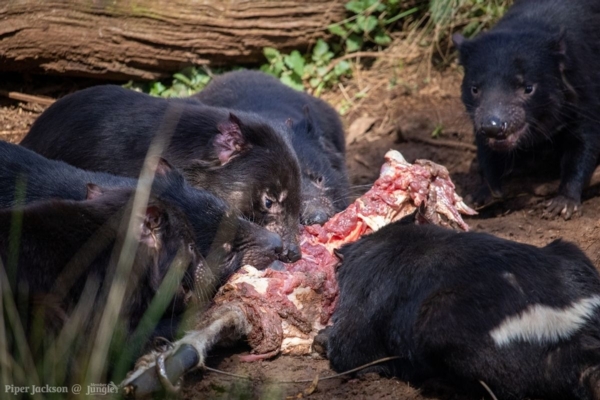
That is because last weekend I visited Aussie Ark, the incredible breeding program based in rural NSW.
So, let me explain who Aussie Ark is, why their work is so important, and some of the amazing things I learnt while I was there. Also, I am not going to lie to you; I am going to do my level best to convince you to go visit them yourself. So, prepare accordingly.
Tasmanian Devil Fun Fact #1
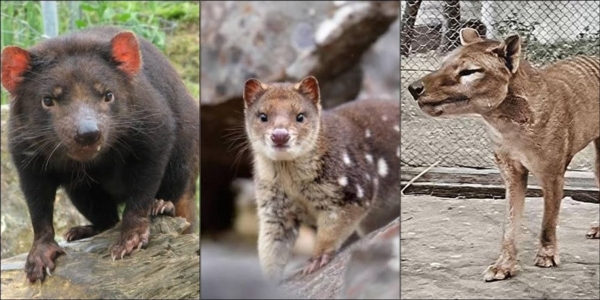
Tasmanian Devils have the strongest bite force compared to body mass of any living mammal. A Devil is able to exert 533 Newtons of force through its bite, giving it a bite force quotient (basically force-to-mass ratio) of 181. Interestingly, the second and third places on the BFQ list are the Spotted-tailed Quoll (Tiger Quoll) and the Thylacine (Tasmanian Tiger).
What Is Aussie Ark?
Aussie Ark is an animal preservation project founded in 2011 as Devil’s Ark. Its original purpose was to breed Tasmanian Devils on the mainland, free from DFTD, the contagious tumour-causing cancer that has wiped out an estimated 90% of wild Tasmanian Devils.
Aussie Ark was set up in the Barrington Tops at 1,300 metres above sea level; the 500-hectare sanctuary was specifically chosen for its ability to closely mimic Tasmania’s climate. Having bred well over 3000 Tasmanian Devils over the past decade, Devil’s Ark decided to broaden its scope to other endangered Australian animals. In 2019, Devil’s Ark was renamed Aussie Ark to match this new expanded goal.
Then, in 2021, Aussie Ark opened Conservation Ark, a sister breeding program based at the Australian Reptile Park, focused on preserving endangered animals like frogs, turtles, snakes, and native rodents that would not thrive in the cold conditions of the original Ark.
Basically, if it is a critically endangered Australian animal you’re looking for, you can probably find it at Aussie Ark.
I first became aware of Aussie Ark in 2023, when I began working at Member Jungle. Member Jungle has long sponsored several of the Ark’s animals, including Tasmanian Devils, Quolls and turtles, and is currently a “Tasmanian Devil” level business sponsor of Aussie Ark.
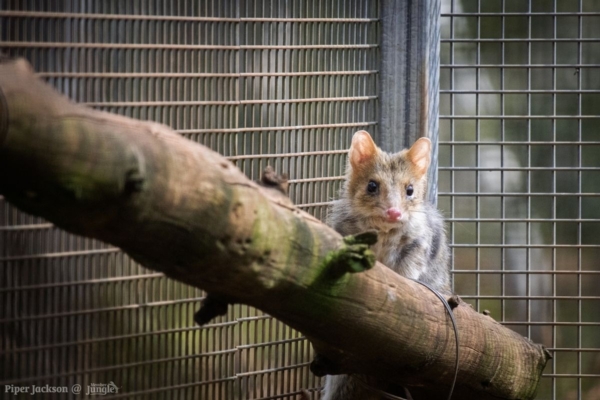
An Eastern Quoll
Having grown up on a farm adoring animals and spending my school holidays volunteering at a local vet clinic, Aussie Ark was something I immediately fell in love with. So, when Member Jungle asked me to head up into the mountains to check Aussie Ark out in order to write this article, I jumped at the chance.
So, I booked a place to stay in the foothills of the Barrington Tops and set off for a weekend away.
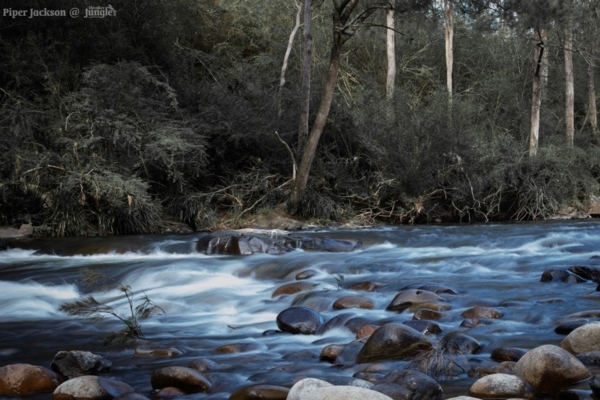
As it turns out, the cabin I booked was actually right on one of the rivers where Aussie Ark rewilded some of the Manning River turtles earlier this year. I spent a lot of time down by the river but didn’t manage to spot any of the turtles. Fortunately, I had much better luck seeing the wildlife up the mountain.
Tasmanian Devil Fun Fact #2
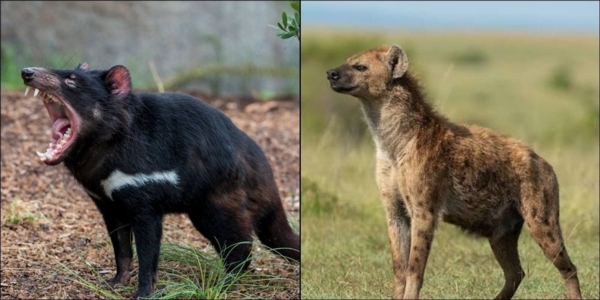
Tasmanian Devils had a complex relationship with the now-extinct Thylacine. Thylacines were the apex predators, and Devils evolved as scavengers, feeding on Thylacines’ kills; Thylacines did hunt and kill Devils, and Devils did hunt and kill Thylacines’ young.
Their relationship was similar to that of the lion and the hyena. This is part of the reason Tasmanian Devils share many similarities with hyenas: extremely powerful jaws designed to crush bones, and longer forelimbs than hindlimbs, resulting in a strong, front-heavy build that is powerful but slow.
A Tour Of Aussie Ark
To actually see the animals, Aussie Ark runs a few different visitor experiences. You can visit during one of their Open Days for a one-hour guided walkthrough, or you can go to the two-hour Devils In The Wild Tour that I did.
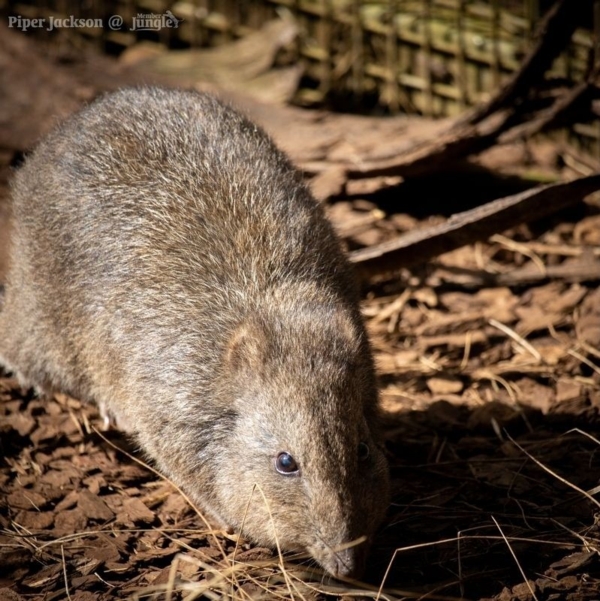
During the tour, we were shown around the Ark; we got to see the devils being fed, the enclosures where the Brush-Tailed Rock Wallabies and Parna Wallabies lived, and eventually the pens where smaller species like Eastern Quolls and Long-Nosed Potoroo (pictured below) are kept. We even got to see a Tassie Devil nursing its joeys.
The entire time, our guide explained all the intricacies and complications of running this massive operation. Breeding these endangered species, then either rewild them in their 500ha reserve or send them to Zoos around the country, so they can start breeding programs of their own.
As with all breeding programs of this nature, it is tightly monitored and controlled, with careful consideration given to where animals are sent and which animals breed with which, to ensure that the new population has as diverse a gene pool as possible.
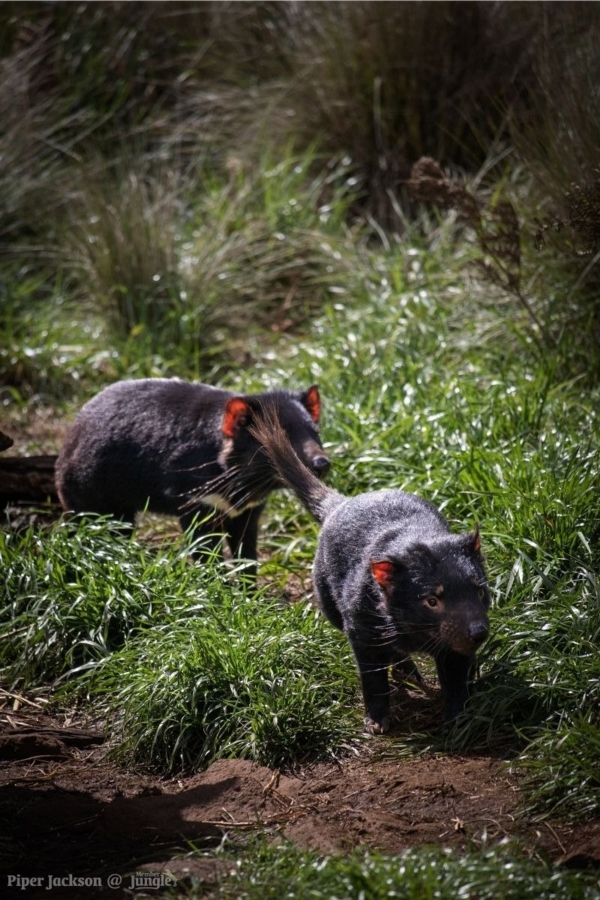
I do have to say that the Devils are adorable; they reminded me so much of dogs. I know giving them cuddles is probably a poor plan, but god I was tempted.
Tasmanian Devil Fun Fact #3
Okay, this fact is less fun, but it is really interesting and important. Devil Facial Tumour Disease (DFTD) is a contagious form of cancer that has wiped out an estimated 90% of wild devils since the 80s. It began with a single female devil in the 80s who developed a cancerous tumour on her face. Devils often compete with one another for food, and biting each other over food is not uncommon. Unfortunately, one devil bit the devil with the tumour, and the infected cells spread. A second strain emerged in 2011 by the same mechanism, but it is not as widespread.
Transmissible cancers are exceedingly rare and tend to occur only in species with low genetic diversity, such as Tasmanian Devils, which survive in the wild on a single island, with shrinking habitat and increasing pressure from people and introduced species, such as cats, dogs, and foxes.
Why You Should Help Aussie Ark
The thing that struck me most about Aussie Ark was the people who worked there. There are three full-time staff members who live and work full-time at the Ark. No phone reception, no power grid, just solar panels and a four-hour drive to the nearest swim-up bar. Yet they are so dedicated that these three full-timers and a handful of part-time volunteers run this entire operation, doing vital work to save critically endangered species.
It costs Aussie Ark roughly $1 million a year to keep the solar-powered lights on, and they run solely on donations and visitor funding. They are a registered charity, which means every ticket bought, every tour booked, and every adoption made directly supports all those adorable little weirdos and the dedicated team working tirelessly to save them.
Aussie Ark gives you a bunch of ways you can support them, so let's have a look at them.
- Go Visit: The best way you can help for so many reasons is to go visit them. It's a gorgeous drive through beautiful country, and makes a great weekend away. Also don’t worry about getting there; my little front wheel drive hatchback made it there and back no problem.
- Donate: You can make a one-off or monthly donation to the Ark to help them keep running.
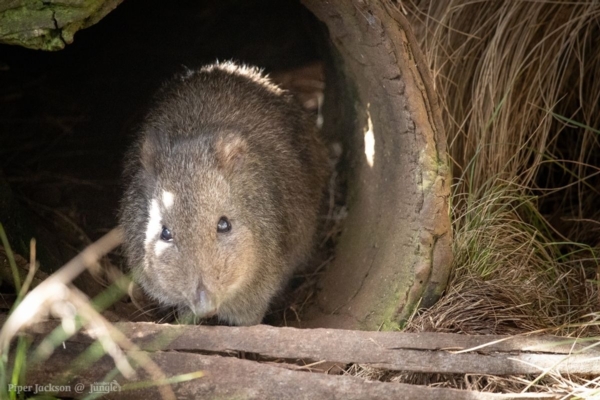
- Adopt an Animal: You can do what Member Jungle has done and adopt animals. In return for a yearly or monthly donation, you can adopt Devils, Koalas, Eastern Quolls and Broadtooth Rats and get an adoption pack in return.
- Die and give them your stuff: Okay, so that's not how Aussie Ark phrases it, but you can bequeath money to Aussie Ark in your will. Leaving money, even a little bit, to the Ark will make a massive difference to them, and it's a great final act for you. It’s the exact reason I’m an organ donor; I won't need it anymore, so it might as well go to a worthy cause. PS. I’m sorry to whoever ends up with my liver.
- Fundraise for Aussie Ark: You can set up a fundraiser at your workplace, school or club to help raise funds for the Ark, which is a great way to both support the work they do and give your community a goal to rally around.
- Buy Stuff: Aussie Ark has an online store where you can buy merchandise that will help fund their great work. From kids' books, socks, hoodies, pins, mugs, bags, soft toys and much more. It is a great way to support them while also getting something besides a warm fuzzy in return.
Ultimately, you should do several of these. Go visit Aussie Ark, make a weekend of it. Adopt an animal or two. Buy some of their merch and drink your morning coffee from a mug that helped save the lives of critically endangered animals.
I had a fantastic weekend and thoroughly enjoyed getting up close with all the animals at Aussie Ark; I could not recommend it highly enough.